FIFTH SUNDAY OF LENT, YEAR A
22ND MARCH 2026
(Ezekiel 37:12-14; Psalm. 130:1-5,7-8; Romans. 8:8-11; John 11:1-45)
SUMMARY OF SUNDAY MESSAGE
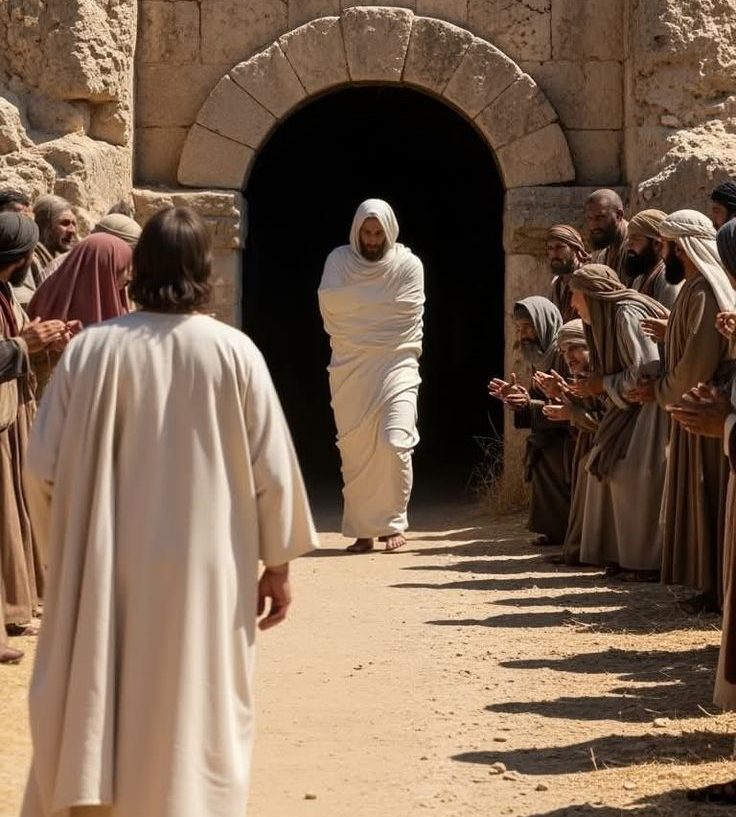
If I were to give today`s celebration a theme, without mincing words, it would be: “He is the God of the living, and not of the dead” (Matt. 22:32). From the dry bones in the grave that would come to life in the First Reading and become a large army because the words of life were spoken to them (Eze. 37:14ff), through the Spirit of God that gives life to our mortal bodies in the Second Reading (Rom. 8:10-11), to the raising of Lazarus to life in the Gospel where this promise was fulfilled (John 11:1-43), all the Readings are united in speaking to this theme. The Gospel passage is long, and at some points, gets us very emotional as we identify with the characters in the passage: the believing Martha, the crying Mary, the dead Lazarus, the concerned sympathizers, and Christ himself who wept at the tomb of Lazarus. Besides the emotions that the passage elicits in us, however, it also calls us to sober reflection on the mysteries of life and death, and to appropriate the message therefrom.
There is this unresolvable restriction that makes everything written on death tentative and unscientific, no matter how brilliant – lack of experience, that anyone who discusses death must do so without having experienced or experimented with it. In any case, by the second law of thermodynamics, death is a complement of organic life, and man is an organic living being. Hence, for every man, the time comes when the body becomes so weak (by old age) or damaged (by sickness or accident) that it can no longer respond to the life-giving energy that the soul pours into it; - this is the time of death when man succumbs to disintegration and decay. Biology technically summarizes the characteristics of living organisms with the acronym “MR NIGER D”: Movement, Respiration, Nutrition, Irritability, Growth, Excretion, Reproduction, and Death. So, death is, for man, a biological necessity; it is defined as the separation of the soul from the body; we had better come to terms with the fact.
Bio-medically, death is categorized into three levels: the somatic, necrosis, and the molecular. “Somatic death” is the death of the whole body as an organic system; the death of some parts of the organism is known as “necrosis”, while “molecular death” is the death of the cells of the body. “When somatic death occurs, not all the cells or tissues of the body undergo necrosis or molecular death at the same time. That is why tissues or organs can be harvested from dead bodies, transplanted and used in living individuals. In the case of Lazarus in today`s Gospel passage, he had undergone molecular death, for, according to Martha, the body was already smelling after four days (John 11:39).
But life, no less than death, is also a mystery. Nick Lane, the London Microchemist and Science Award Winner, begins his celebrated book “The Vital Question’ with an honest admission of ignorance on the mysterious nature of the living cell: “There is a black hole at the heart of biology. Bluntly put, we do not know why life is the way it is”. If death is a biological necessity, life is the overriding fact of existence, which relativises death to “a passage” between two dimensions of life: mortal life and eternal life. Jesus assures us in the Gospel Reading that he is the resurrection and the life; so, anyone who believes in him, even though he dies, yet shall he live, and anyone who lives and believes in him shall never die (John 11:25-26) – an assurance that is concretely reinforced by his own death and resurrection. He is our true “Kokumo” who died, resurrected, and dies no more.
But, to share in the resurrection of Christ and life eternal, we must adequately prepare for death. Spiritually, the illness and death of Lazarus can be likened to venial and mortal sins, as distinguished by St John: “There is such a thing as deadly sin, about which I do not say that you should pray. All wrongdoing is sin, but there is sin that is not deadly” (1John 5:16-17). If we grant that no one is perfect and so, cannot but commit sin at one point or the other in life, then, we should be content with venial sin which sickens the soul, and not with mortal sin which kills the soul. And, since with each passing day, we move closer to our grave, we should constantly ask and answer the questions: How am I preparing to answer the final call? And when that day comes, what legacy of good works and achievements am I leaving behind?
May Christ himself, through his Spirit, give life to our mortal bodies; heal every dead cell and organ in the sick; and revive our drooping spirit by the grace of the sacraments. Amen.
Wishing you a Happy Sunday of Divine Restoration!!!
(Rev. Fr. David-Mary Odunsi)
FOURTH SUNDAY OF LENT, YEAR A
(15th March 2026)
(1 Samuel 16:1,6-7,10-13; Ps. 23:1-6; Ephesians 5:8-14; John 9:1-41)
SUMMARY OF SUNDAY MESSAGE
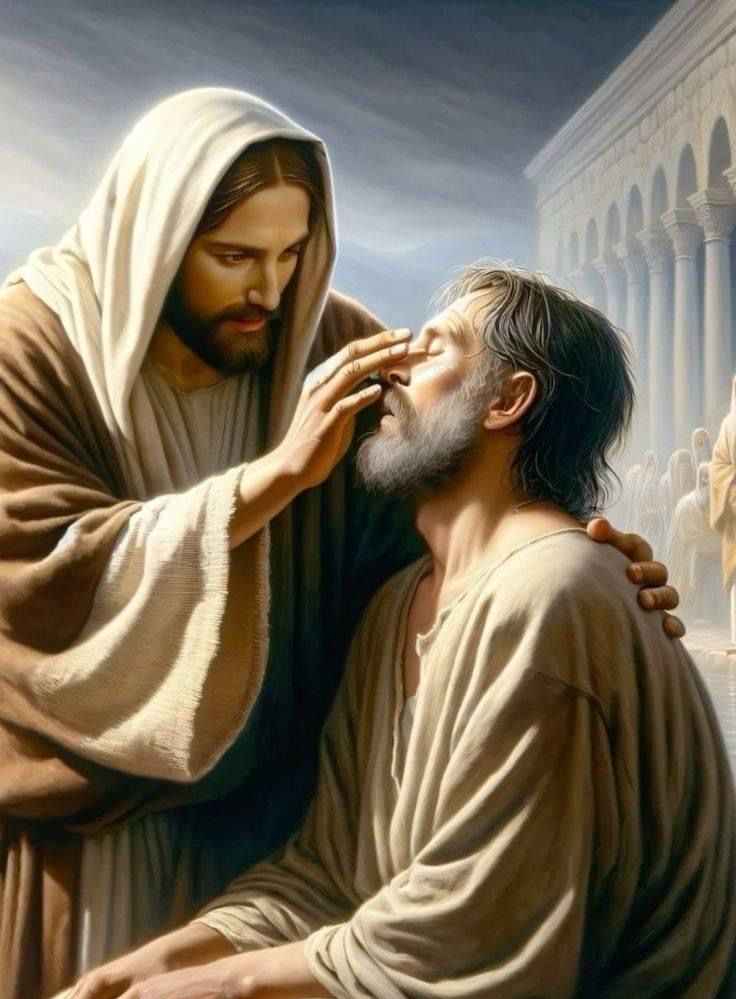
When people speak in coded language proper to a particular group or profession, only those who “belong” will understand and join in the discussion. Similarly, only a person with spiritual insight can understand spiritual realities that are couched in spiritual language (cf. 1 Cor. 2:11-14). In today’s First Reading, it is obvious that Samuel at first lacked “spiritual insight” when he supposed Eliab, Jesse’s first son, and his older sons, to be God’s chosen king. The required enlightenment was given him when David arrived, and he recognized in him “God’s Chosen One”. In the Gospel, Jesus truly proves himself to be “the Light of the world” (John 8:12) as he led the man born blind from physical darkness through the PHYSICAL SIGHT of the body to the SPIRITUAL INSIGHT of faith (John 9:1-7, 35-38).
Following sound pastoral hermeneutics, the fact that the blind man was not identified by name means that he can stand for any of us – the readers or hearers of the Word. So, what kind of blindness do we suffer from? From the passage, we identify four kinds of blindness. There is the “physical blindness” of which the man born blind typifies. There is also the “blindness arising from fear” (of pain or loss) which the parents of the blind man represent. The third kind is the “reality blindness” that could not recognize and prioritize the need of the moment but rather occupies itself with irrelevances and unnecessary rationalizations. This is seen in the apostles who, rather than help the man born blind, started theorizing on the cause of the blindness. Lastly, we have “prejudice” or “psychological blindness” that fails to see the truth or good in others because we are in opposition to or in enmity with them. This is perfectly typified in the Pharisees who would not admit the miracle performed by Christ in healing the blind man because they have constituted themselves the enemies of the Christ.
Each of us will have to identify with one or more of these kinds of blindness. If only we will swallow our pride and envy, and open ourselves to the light of Christ, we will receive not just the sight we need, but also the spiritual insight we lack to do good and appreciate the good in others (John 9:39). Like the Second Reading tells us that we are already “children of light” (Eph. 5:8) who should walk in the light of the Lord; we must seek to put into good use our sense of sight which serves as window to our mind, lest corrupt images gain entrance through them into our minds to form our thoughts, to shape our speeches, and mold our character. For, as Christ tells us, ‘‘Ex abundantio cordis, os loquator” (Matt 12:34). However, to bear the required fruits of light, we need to sharpen our spiritual insight by: constant reading and meditation on the Word of God. Only then shall we be blessed light the tree that is planted besides the flowing river; that brings forth its fruits in due season; and all that we do shall prosper (cf. Psalm 1:2-3).
Wishing you a Happy Sunday of Spiritual Insight!!!
(Rev. Fr. David-Mary Odunsi)